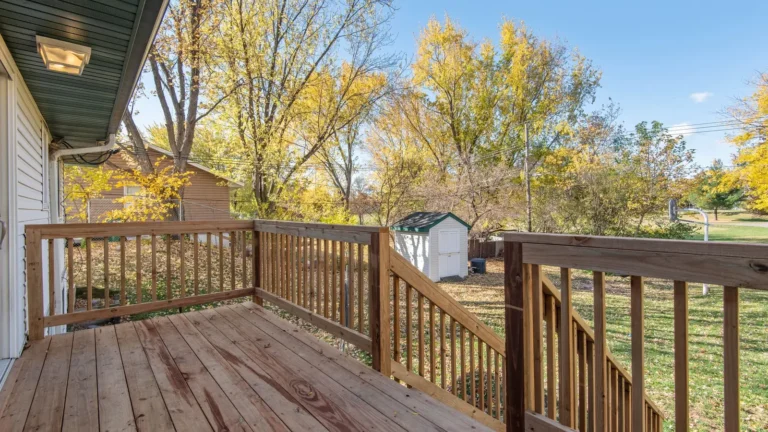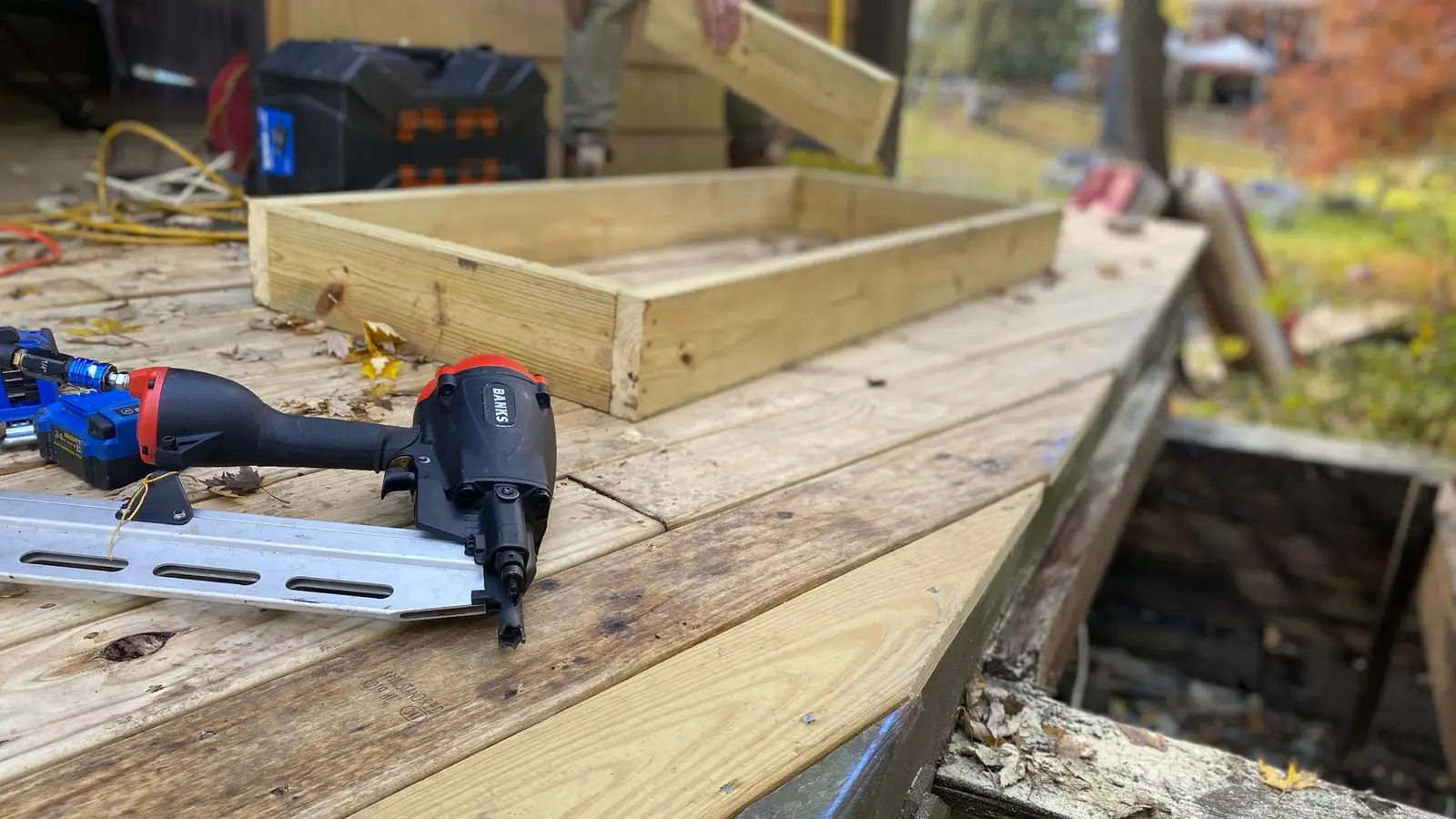

A deck ledger is the board fastened to the side of the house that carries one end of the deck joists. Because it ties the deck to the house, it is the connection plan reviewers and inspectors examine most closely; failed ledgers are a leading cause of deck collapses. The code is specific about what the ledger attaches to, how it is fastened, how water is kept out and how the deck is tied in against lateral movement.
Quick answer: A deck ledger must attach to the house’s rim joist or band board, not to siding, brick veneer or cantilevered floor joists, using through-bolts or lag screws of the specified size in a staggered pattern. Flashing must keep water out of the house framing, and many codes require lateral load hold-downs. If the house can’t take a ledger, build the deck freestanding.
What a deck ledger can attach to
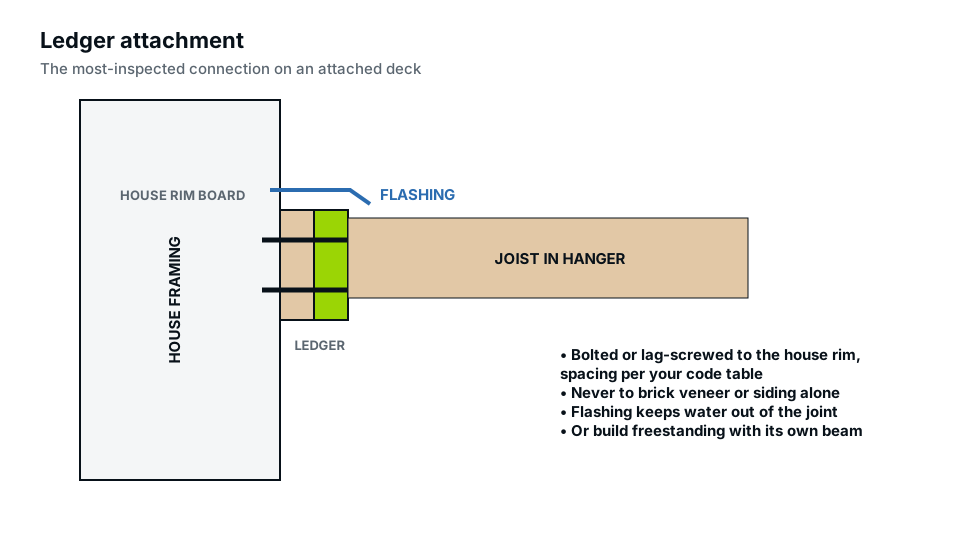
The ledger must bear against the house’s structural rim (also called a band joist or rim board), which sits on the foundation and supports the floor. The IRC doesn’t allow ledgers to be attached to:
- brick or stone veneer;
- siding or sheathing alone, without the rim behind it;
- floor overhangs or cantilevered joists, such as a bay or bump-out;
- engineered rim boards not rated for the connection, without verification.
Siding is removed where the ledger goes so the ledger bears on the sheathing over the rim. For brick, stucco over masonry or overhangs, the usual solution is a freestanding deck, covered later in this article. Our pillar deck permit guide covers the rest of the deck design.
Ledger size and material
The ledger is commonly at least as deep as the deck joists, and the IRC sets a minimum ledger size. It must be preservative-treated lumber rated for the exposure. Joists attach to the ledger with joist hangers sized for the joist, using fasteners compatible with treated wood.
Fastening: bolts and lag screws
The code provides a table of fastener spacing based on the joist span. Typical requirements:
- ½-inch diameter through-bolts with washers, or ½-inch lag screws of sufficient length.
- Fasteners staggered top and bottom along the ledger, with set edge and end distances.
- Spacing tighter for longer joist spans.
- Hot-dip galvanised or stainless hardware suitable for treated lumber.
- Nails alone are not acceptable for ledger attachment.
Some proprietary structural screws are approved as an alternative, with their evaluation report. Show the fastener type, size and spacing on your ledger detail.
Flashing the deck ledger
Water getting behind the ledger rots the ledger and the house rim, weakening exactly the parts that hold the deck up. Flashing is required to direct water away. A common approach is a flashing that runs up behind the house wrap or siding above the ledger and over the top of the ledger, with a drip edge. Some details also add membrane behind the ledger. Use flashing material compatible with treated lumber, as some treatments corrode aluminium.
Lateral load connections
Ledger bolts resist the deck’s weight but not all of the sideways pull when people move on the deck or the wind pushes on it. The IRC includes a lateral load connection: hold-down tension devices that tie the deck joists through the ledger into the house floor framing, installed at a specified number of locations with a minimum rated capacity. The code also provides alternatives. Show the device, its rating and locations on the drawings.
Freestanding decks: the alternative
If the house can’t support a ledger, or you want to avoid penetrating the wall, build the deck freestanding: add a beam and posts a short distance from the house, so the deck stands on its own. Freestanding decks need lateral bracing, because they don’t get stability from the house, and their footings near the house shouldn’t bear on foundation backfill. A freestanding deck is often the cleanest answer for brick homes and houses with cantilevered floors. The difference also affects whether a small deck needs a permit at all, as explained in do you need a permit for a deck.
Common ledger problems reviewers flag
| Problem | Fix |
|---|---|
| Ledger on brick veneer | Freestanding deck or engineered connection |
| Ledger on a cantilever | Freestanding deck, or engineered support |
| Fasteners not specified | Add size, type, spacing and stagger to the detail |
| No flashing shown | Add a flashing detail |
| No lateral connection | Add hold-downs with rating and locations |
| Rim not verified | Note rim size and material; field verify |
What the inspector checks
At the framing inspection, before the decking goes on, the inspector looks at fastener size, spacing and stagger, flashing, joist hangers and their nailing, and lateral devices. Keep the framing open until it passes. For replacements, inspectors also look at the condition of the house rim; rot found when the old ledger comes off has to be repaired before the new one goes on.
Showing the ledger on permit drawings
A complete ledger detail is a section through the house wall and ledger showing the rim, sheathing, flashing, ledger size, fasteners, joist hanger and lateral device. Include a note on the elevation or plan showing the ledger length and fastener pattern. Our deck permit drawings include this detail as standard. If your situation goes beyond the code tables, our engineer-stamped plans can design the connection.
Replacing an old deck
Many older decks were nailed to the house, attached to siding or built without flashing. When replacing one, plan to remove the old ledger, inspect and repair the rim and sheathing, install new flashing and attach the new ledger to current code. This is often where hidden rot is found, so allow for repairs.
Frequently asked questions
Can I attach a deck ledger to brick?
Not to brick veneer. Build the deck freestanding or use an engineered connection through to the structure.
Should I use bolts or lag screws for a deck ledger?
Both are allowed when sized and spaced per the code table. Through-bolts are common where the rim is accessible from inside.
Is flashing required on a deck ledger?
Yes. The code requires flashing to keep water out of the house framing.
What is a lateral load connection?
Hold-down hardware that ties the deck into the house floor framing to resist sideways forces.
Can I nail a ledger to the house?
No. Nails alone are not an acceptable ledger connection.