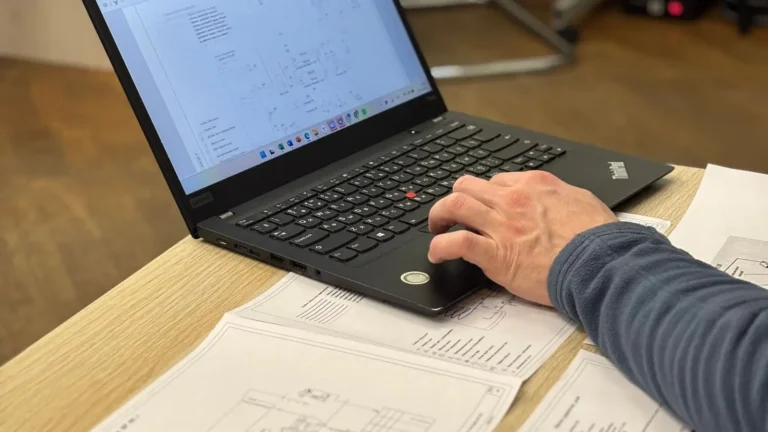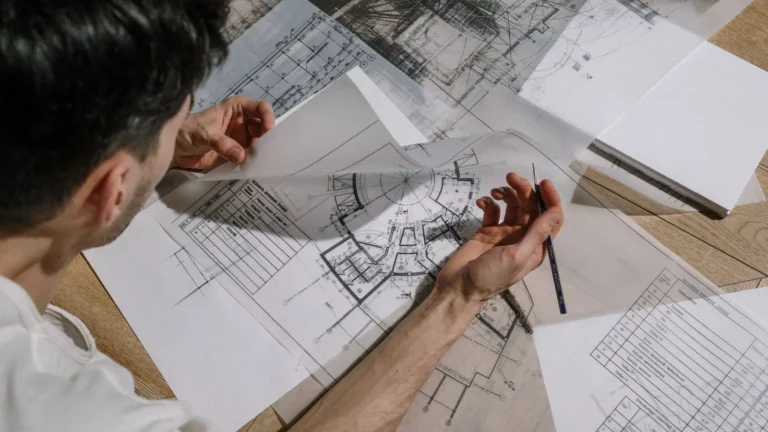

A permit response letter is the document you send with revised drawings to answer each plan review comment. It tells the reviewer exactly what changed and where to find it. Reviewers handle many files, so a clear letter can be the difference between a quick approval and another round of comments. It is short, structured and factual, and anyone can write a good one.
Quick answer: A permit response letter lists every reviewer comment by number, followed by a specific response stating what was changed and where, such as the sheet number, detail and revision delta. It includes a header with the permit number, address and date, and ends with contact details. Keep responses short, factual and verifiable.
What a permit response letter does
The letter is a map. It connects each comment to the evidence in the drawings. Without it, the reviewer has to search the set to see whether each comment was addressed; with it, they can check each one in order. Some offices require a response letter, sometimes called a “response to comments”, “comment response matrix” or “resubmittal letter”. Where it isn’t required, it still helps. It is one step of the process in responding to permit correction comments, part of our guide to why building permits get rejected.
Structure of a permit response letter
- Header: date, permit or application number, project address, parcel number, and the reviewer’s name and department if known.
- Opening line: one sentence saying this responds to the comments dated X.
- Responses: each comment quoted or summarised, with its number, followed by the response.
- List of revised sheets: which sheets changed, with revision numbers.
- Closing: contact name, phone and email for questions.
Template
[Date]
Re: Permit No. [number] · [Project address] · Parcel [number]
Response to plan review comments dated [date]
Below are our responses to each comment. Changes are clouded and marked with revision delta [1] on the revised sheets.
Comment 1 (Zoning): [Comment text]
Response: [What was changed], see Sheet [X], [detail], delta [1].
Comment 2 (Building): [Comment text]
Response: [What was changed], see Sheet [X], delta [1].
Revised sheets: [A0.1, S1, A2.1]
Please contact [name] at [phone / email] with any questions.
Writing each response
A strong response has three parts: what was done, where it is, and how to recognise it. For example:
- “Added dimension from the proposed shed to the rear property line (12′-0″) and side property line (5′-6″). See Sheet A0.1, delta 1.”
- “Revised deck ledger detail to show ½” through-bolts staggered at 16″ o.c. with flashing. See Detail 2/S1, delta 1.”
- “Added smoke and CO alarm locations to the floor plan. See Sheet A1.1, delta 1.”
Avoid “done”, “revised”, “see plans” or “will comply”. They force the reviewer to search and invite a repeat comment.
When you disagree with a comment
Sometimes a comment doesn’t apply, for example because the code section cited is for a different occupancy, or the information is already shown. Respond politely with the reason and the evidence: “The required information is shown on Sheet A0.1, note 4, which states the 32″ frost depth. We have enlarged the note for clarity, delta 1.” If it is a code interpretation question, cite the section and ask for confirmation. Never leave a comment unanswered.
Responding when the design changed
If a comment forced a design change, describe the change and its effects: “Deck reduced from 16′-0″ to 14′-0″ deep to meet the 20′-0″ rear setback. Framing plan, footing plan and elevations updated accordingly. See Sheets A0.1, S1, A2.1, delta 1.” Mentioning knock-on changes prevents the reviewer from finding unexplained differences.
Unrelated changes
If you made changes that weren’t requested, list them separately under “Additional changes” and cloud them. Hidden changes can trigger a new review cycle when discovered.
Formatting tips
- Use the reviewer’s numbering, or number comments yourself in order.
- Group by reviewer or discipline if comments came from several.
- Keep the comment text visually distinct from your response, using bold labels or a table.
- Use the same sheet numbers as the drawing set.
- Save as a PDF named as the portal requires.
- Keep it to the point; one page is often enough for small projects.
Response letter as a table
For longer comment lists, a table is often clearer:
| # | Comment | Response | Sheet / delta |
|---|---|---|---|
| 1 | Show distance to rear lot line | Added 18′-4″ dimension | A0.1 / 1 |
| 2 | Provide beam size | (2) 2×10 SPF #2 beam specified | S1 / 1 |
| 3 | Stair riser height | 7¾” max riser noted | A2.1 / 1 |
Common mistakes
- Missing a comment, especially one buried in a long paragraph.
- Sheet references that don’t match the revised set.
- Responses that describe intent (“we will add”) rather than what was done.
- A defensive or argumentative tone.
- Forgetting the permit number, so the letter can’t be matched to the file.
A worked example for a shed permit
Suppose the reviewer sent three comments on a 12 × 16 ft shed: (1) show the distance to the side and rear property lines, (2) provide the anchoring method, and (3) confirm the shed is outside the 10 ft utility easement. A complete response reads: “1. Added dimensions to the side (6′-0″) and rear (8′-0″) property lines; required 5′-0″ each. Sheet A0.1, delta 1. 2. Added anchoring note and detail per manufacturer instructions, attached. Sheet S1, delta 1. 3. Easement shown and dimensioned; shed is 2′-0″ clear of the easement line. Sheet A0.1, delta 1.” Three lines, each verifiable in seconds.
Who should sign it
Usually the applicant, designer or contractor who prepared the revisions. Where an engineer revised structural sheets, their responses may need to come from them. Our permit corrections service includes the response letter with the revised drawings.
Frequently asked questions
Is a permit response letter required?
Many offices require one for resubmittals. Even when optional, it speeds up review.
How long should a permit response letter be?
As long as the comment list needs: often one page for small projects. Specific answers matter more than length.
Can I email the response letter to the reviewer?
Submit it through the official channel, usually the portal, with the revised drawings. Emailing as well is fine if the office allows it.
What if I can’t address a comment?
Explain why and propose an alternative, or ask the reviewer how to proceed. Don’t leave it blank.
Should I repeat the comment text?
Yes, or summarise it with the reviewer’s number, so each response stands on its own.