
The good side of the fence is the finished face, without the posts and horizontal rails showing. By custom, and under many local codes and HOA rules, it faces outward toward neighbours and the street. Where no rule applies, you can choose, but facing it out is the safer and more neighbourly option. Here is what the rules say and how to handle each situation.
Quick answer: Many cities and HOAs require the good, finished side of the fence to face outward toward neighbouring properties and streets, with posts and rails on the owner’s side. Where there is no rule, facing it out is still the custom. Double-sided styles, such as shadowbox or board-on-board, avoid the question by looking finished on both sides.
What “the good side of the fence” means
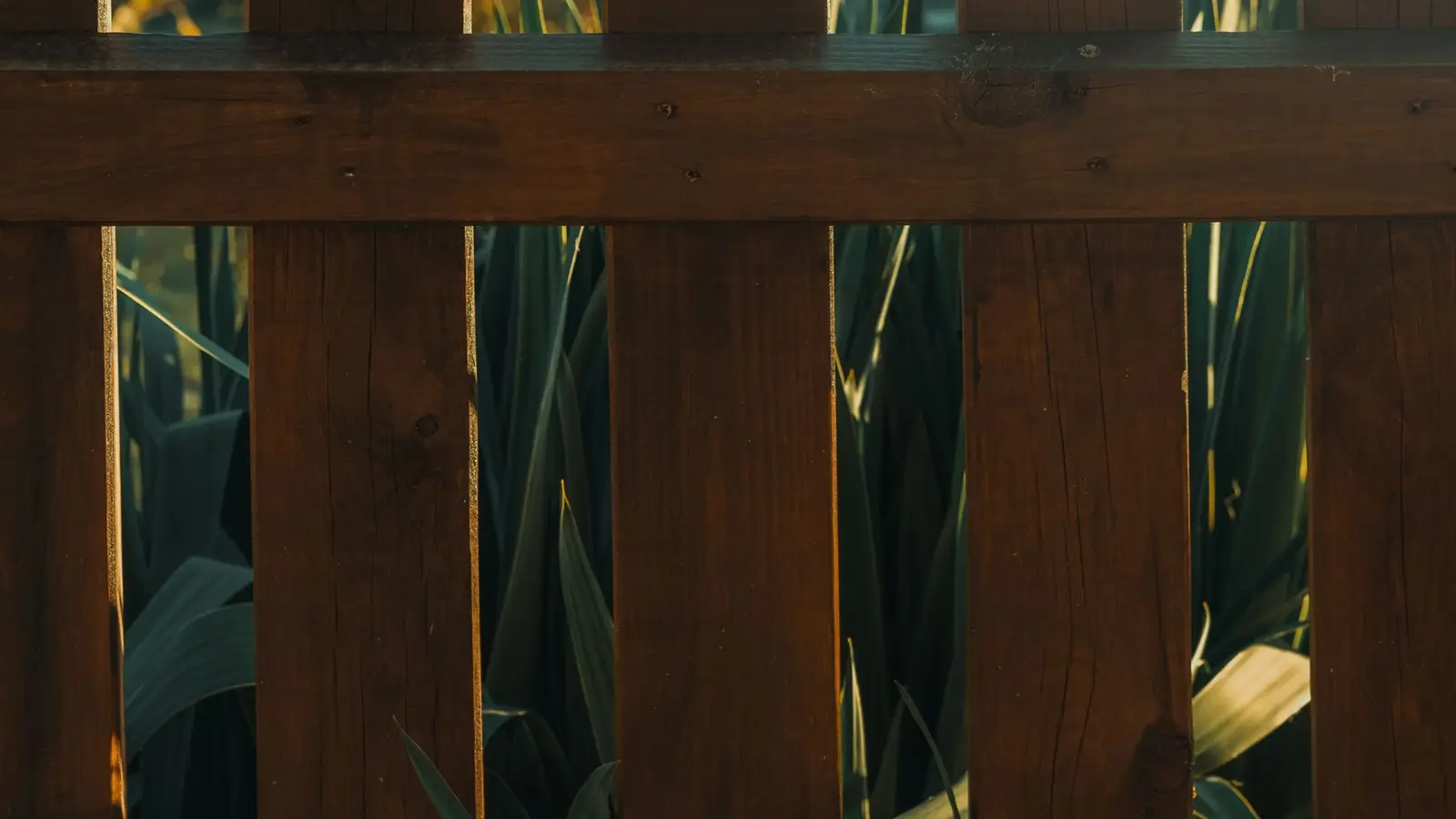
Most wooden privacy fences have boards fastened to one side of horizontal rails, which are attached to posts. The side with the boards only, smooth and uniform, is the finished or “good” side. The other side shows the framing. Vinyl and some metal fences look the same from both sides, so the question doesn’t arise. Our pillar fence permit guide covers the other rules that apply to fences.
Codes that require the good side out
Some zoning codes require the finished side to face adjacent properties and public streets. The rationale is fairness and appearance: neighbours and the public see the finished face, and the owner, who chose the fence, sees the framing. Where such a rule exists, it is often in the fence section of the zoning code, sometimes under “fence construction” or “orientation”. Not every code has one, so check yours.
HOA rules
HOAs commonly require the good side out, and many go further, specifying the fence style, colour, height and even the exact product so fences match across the neighbourhood. Some require the finished side facing out on street-facing runs only. Read your covenants and design guidelines, and include the fence orientation in your HOA application.
Why it is the custom anyway
- Appearance: the street and neighbours see a finished face.
- Security: rails on the outside can act as a ladder; on the inside, they are harder to climb from outside.
- Maintenance: with the framing on your side, you can reach posts and rails to repair them.
- Neighbour relations: it avoids an easy source of friction.
The security point matters for pool fences in particular, where horizontal members on the outside can make the barrier climbable. See pool barrier requirements.
Shared fences on the property line
When a fence straddles the line and neighbours share the cost, they can agree on orientation, often alternating or choosing a double-sided design. Put the agreement in writing. If you are building inside your own line, the code or HOA rule, if any, applies, and otherwise it is your choice. See fence distance from the property line for placement choices.
Fence styles that look good both ways
| Style | How it works |
|---|---|
| Shadowbox | Boards alternate on each side of the rails, open to air flow |
| Board-on-board | Overlapping boards on both sides for full privacy |
| Horizontal slat with centred posts | Slats fixed between or onto posts so both faces look similar |
| Vinyl panels | Usually identical on both faces |
| Ornamental metal | Rails visible on both sides but symmetrical |
These styles cost more in materials but remove the question and often satisfy HOA rules.
Corner lots and street sides
On corner lots, a fence along the side street is highly visible, and some codes specifically require its finished side to face the street. Combined with lower street-side height limits and sight triangles, corner-lot fences need extra planning; see corner lot fence rules.
Showing orientation on your permit
If your code or HOA has an orientation rule, show it on the site plan with a note such as “Finished side faces out on all runs” or an arrow on each run. Include a simple elevation of the fence style. Our fence permit site plans include an orientation note and a typical fence elevation.
Replacing a fence with the wrong side out
If your existing fence has its framing facing outward and a new rule now requires the opposite, replacement will usually need to meet the current rule. Repairs to a few boards typically don’t trigger it. If you are buying a home, a fence with the wrong side out isn’t usually a legal problem, but it may matter to an HOA.
Gates and the good side
Gates follow the same logic as the fence: the finished face usually goes outward, with the frame, diagonal brace and hinges on the inside. Hinges on the inside are also harder to tamper with. For pool enclosures, gate hardware has specific rules on latch height and which way the gate swings, which take priority over appearance.
Other fence etiquette worth knowing
- Tell neighbours before you build, especially if you’ll need access to their side.
- Keep the fence in good repair; many codes have maintenance requirements.
- Don’t attach to a neighbour’s fence without agreement.
- Plan drainage so the fence doesn’t dam water onto their yard.
Frequently asked questions
Which side of the fence faces the neighbour?
By custom and many local rules, the good, finished side faces the neighbour, with posts and rails on your side.
Is it illegal to put the good side of the fence facing in?
Only if your local code or HOA requires the good side out. Many codes have no such rule.
What is a good-neighbour fence?
A fence that looks finished on both sides, such as shadowbox or board-on-board.
Can my neighbour make me change my fence orientation?
Not on their own, unless a code or HOA rule requires it. They can report a violation if one exists.
Which way should a vinyl fence face?
Most vinyl panels look the same on both sides, so orientation rarely matters, but follow any HOA rule on post or rail placement.
Does the good side out make the fence less secure?
No. With rails on the inside, the outside is harder to climb, which can make it more secure.