
An above-ground pool permit is required in most U.S. jurisdictions once a pool holds water 24 inches deep or more. Because above-ground pools are bought as kits and set up in a weekend, many owners don’t realise they need one. The permit is usually simpler than for an in-ground pool, but it still covers location, the barrier, the ladder or deck, and electrical work for the pump.
Quick answer: The model residential code exempts only prefabricated pools less than 24 inches deep, so most above-ground pools need a permit. The application typically includes a site plan with setbacks, the manufacturer’s specifications, barrier details (the pool wall can count if it is at least 48 inches high and the ladder is secured) and electrical details for the pump.
When you need an above-ground pool permit
The 24-inch depth rule is the key threshold in the International Residential Code. A 52-inch-wall pool clearly needs a permit; a small inflatable paddling pool doesn’t. In between, measure the maximum water depth the pool can hold. Some local codes use volume or surface area instead, and some require permits for any pool that holds water for more than a set number of days. Check locally. Our pillar pool permit guide covers pools in general.
Placement and setbacks
Above-ground pools are usually treated as accessory structures with setbacks from property lines, and typically aren’t allowed in front yards. They also need:
- level, compacted ground, not fill over a septic field;
- clearance from overhead and underground power lines;
- no placement in easements;
- space for the pump and filter, often with its own setback.
See pool setback requirements for how these are measured.
Barrier rules for above-ground pools
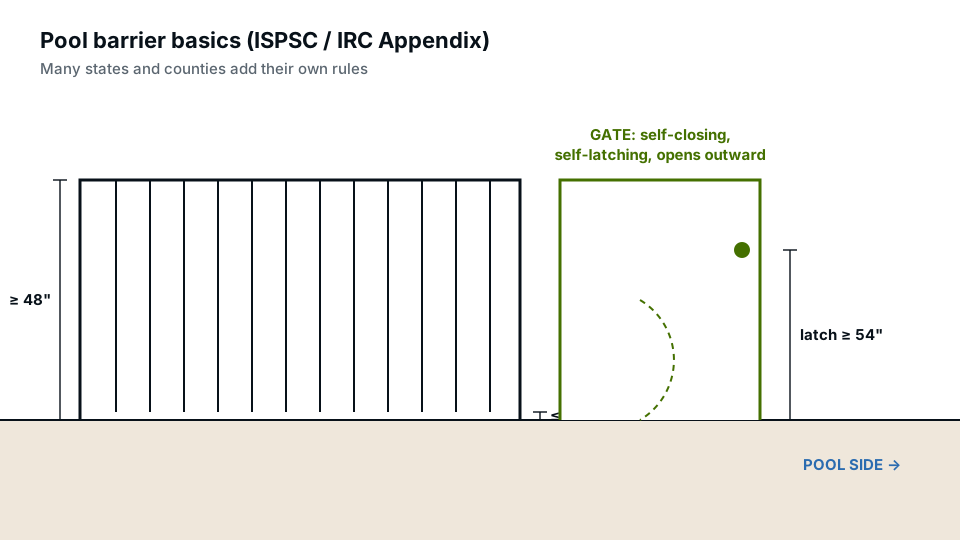
The pool wall can serve as the barrier if it is at least 48 inches above grade and not climbable from outside. The ladder is the weak point. Model codes allow one of:
- a ladder or steps that can be removed or secured so they can’t be used;
- a ladder or steps surrounded by their own barrier with a self-closing, self-latching gate;
- a deck access with a compliant barrier and gate.
Pools with walls under 48 inches need a separate barrier around them. Our pool barrier requirements guide gives the full dimensions.
Decks around above-ground pools
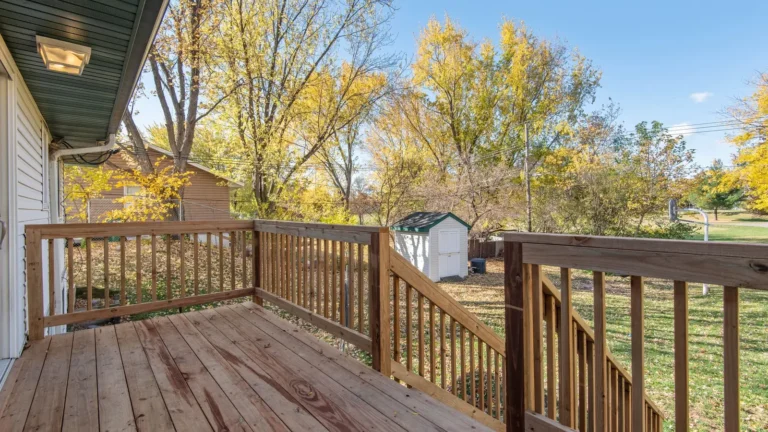
A deck beside or around an above-ground pool is a separate structure that often needs its own permit and must meet deck rules for footings, framing, guards and stairs. The deck also becomes the access point to the pool, so the barrier must continue around it, usually with a gate at the top of the stairs. See our deck permit guide.
Electrical requirements
Pumps for above-ground pools need GFCI protection, and the electrical code limits extension cords and sets minimum and maximum distances for receptacles near pools. Bonding requirements also apply to many above-ground pools, especially those with metal walls. Many places require a separate electrical permit, sometimes with a licensed electrician. Plan a dedicated outlet in the right location before the pool goes up.
What to submit
- Application form and fee.
- A site plan showing property lines, the house, the pool, pump location, setbacks, easements and power lines.
- Manufacturer’s specifications and installation instructions.
- Barrier details: wall height, ladder type, any fence and gates.
- Deck drawings if a deck is included.
- Electrical information for the pump outlet.
Our pool site plans cover above-ground pools too.
Inspections
Expect fewer inspections than for in-ground pools. Common ones are an electrical inspection for the outlet and bonding, a barrier inspection, and a final. If a deck is included, its footings and framing are inspected too. Many permits require the barrier to pass before the pool is filled.
Choosing a level, safe location
Above-ground pools need a flat, firm base, because water exerts a lot of pressure on the walls and an uneven base can cause a wall to buckle. Most manufacturers require the pool to sit on undisturbed or compacted soil, not on fill, and specify a maximum slope. Excavating the high side, rather than building up the low side, is the usual approach. Avoid areas over septic tanks and drain fields, underground utilities, tree roots and low spots where water collects. Leave space around the pool for the pump, filter, ladder and a clear path for maintenance, and keep the pool where an adult indoors can see it.
Seasonal and temporary pools
Some owners put a pool up each summer and take it down each autumn. Many codes treat that as a permitted structure each time it is installed, though some issue a permit that covers repeated seasonal installation in the same place. Ask your building department how they handle it.
Common problems
- Pool placed in a utility easement or under a power line.
- Ladder left in place without a barrier.
- Pump plugged into an extension cord.
- Pool on a slope without proper levelling, stressing the walls.
- Deck built without its own permit.
- Draining the pool onto a neighbour’s property or into the street.
Draining and removal
When draining or removing an above-ground pool, check local rules on discharging pool water. Many cities require dechlorination and prohibit draining into storm drains or onto neighbouring land. Removing a permitted pool may require notifying the building department so the record is updated.
Frequently asked questions
Do I need a permit for an above-ground pool?
Usually, if it holds water 24 inches deep or more. Check your local code.
Does an above-ground pool need a fence?
Not if the wall is at least 48 inches high and the ladder is removable, lockable or enclosed. Otherwise, yes.
Can I plug my pool pump into an extension cord?
The electrical code generally prohibits it. Use a properly located GFCI outlet.
Does a deck around an above-ground pool need a permit?
Usually, and the deck becomes part of the barrier, with a gate at the stairs.
Do inflatable pools need a permit?
Not if they are under 24 inches deep, under the model code. Some local codes regulate them anyway.